Contemporary Challenges: Spring-2026
HW week 2 (SOLUTION): Due 6 Friday
- Travel by car or bike
S1 5510S
(Remember to read the Homework-Write-Up Guide)
In this question you will compare the energy used by (i) an electric bicycle traveling 15 miles at 15 mph to (ii) the energy used by an electric car traveling the same distance at 60 miles per hour.
- Find the ratio of the energies used by the two options. I'm looking for a numerical value of the ratio. Use the simplest coarse-grained model for transport (kinetic energy of the wind tail) and clearly state your assumptions (for example, assume flat roads).
- Use a more refined model by including rolling resistance. The rolling resistance for cars and bicyles is equivalent to climbing an uphill grade of approximately 1%. (The exact value of the equivalent uphill grade depends on the tire pressure, and the viscoelasticity of the tire material).
As we saw in class, the energy in the wind tail of a car is given by
\begin{align*} \text{Energy in car's wind trail} &= \frac{1}{2}\rho C_{\text{D,car}} A_{\text{car}} v_{\text{car}}^2 d. \\ \end{align*}
For a bike, I can then write down
\begin{align*} \text{Energy in bike's wind trail} &= \frac{1}{2}\rho C_{\text{D,bike}} A_{\text{bike}} v_{\text{bike}}^2 d. \\ \end{align*}
The ratio of these energies is \begin{align*} \frac{\text{Energy in car's wind trail}}{\text{Energy in bike's wind trail}} = \frac{\cancel{\tfrac{1}{2}}C_{\text{D,car}}A_{\text{car}} v_{\text{car}}^2\cancel{d_{car}}}{\cancel{\tfrac{1}{2}}C_{\text{D,bike}} A_{\text{bike}} v_{\text{bike}}^2\cancel{d_{bike}}} \\ \end{align*}
since I'm considering the car and the bike going the same distance. The ratio of the speeds is 4 (given in the question prompt). As discussed in class, \(C_{\text{D,car}}A_{\text{car}} \approx 1 \text{ m}^2\). An adult riding a commuter bike presents a frontal area of about 0.5 m\(^2\) and a drag coefficient of \(\approx\) 1. Substituting these values in, I get
\begin{align*} \frac{\text{Energy in car's wind trail}}{\text{Energy in bike's wind trail}} \approx \frac{1\text{ m}^2}{0.5\text{ m}^2}(4)^2=32 \\ \end{align*}
This tells me that the car uses about 32 times more energy than the bike.
To include rolling resistance in my model, \begin{align*} \frac{E_{\text{car}}}{E_{\text{bike}}} &= \frac{\text{Energy in car's wind trail} + \text{Work done on car by rolling resistance}}{\text{Energy in bike's wind trail} + \text{Work done on bike by rolling resistance}} \\ &= \frac{\tfrac{1}{2}C_{\text{D,car}}A_{{\text{car}}} \rho_{\text{air}} v_{\text{car}}^2\cancel {d_{\text{car}}} + m_{\text{car}}g[0.01] \cancel{d_{\text{car}}}}{\tfrac{1}{2}C_{\text{D,bike}} A_{\text{bike}} \rho_{\text{air}} v_{\text{bike}}^2\cancel{d_{\text{bike}}}+ m_{bike}g [0.01]\cancel{d_{\text{bike}}}} \\ \end{align*}
Where I've modeled the rolling resistance as equivalent to climbing a 1% slope. A typical car mass might be 1500kg and a typical bike and rider mass might be 80 kg.
The density of air is \(\rho_{air} \approx 1.2 \text{ kg/m}^3\)
Making conversions to SI units: \begin{align*} v_{\text{car}} = 60 \text{ mph} \left(0.44 \frac{\text{m/s}}{\text{mph}}\right) = 26.4 \text{ m/s}\\ v_{\text{bike}} = 15 \text{ mph} \left(0.44 \frac{\text{m/s}}{\text{mph}}\right) = 6.6 \text{ m/s}\\ \end{align*}
Plugging in \begin{align*} \frac{E_{\text{car}}}{E_{\text{bike}}} &= \frac{\tfrac{1}{2}[1 \text{ m}^2] [1.2 \text{ kg/m}^3][26.4 \text{ m/s}]^2 + 0.01[1500 \text{ kg}][10 \text{ N/kg}] }{\tfrac{1}{2} [0.5 \text{ m}^2] (1.2 \text{ kg/m}^3] [6.6 \text{ m/s}]^2+ 0.01[80 \text{ kg}][10 \text{ N/kg}]} \\ &= 27 \end{align*} So, in this more realistic model, the car uses about 27 times more energy than the bicycle. Including rolling resistance refines the initial model, but the correction is relatively small.
- Heat loss from a single-family home in winter
S1 5510S
Consider a family home that has a floor area of 50 feet \(\times\) 50 feet, and a ceiling height of 10 feet. The house has typical the insulation for the Pacific Northwest: R-15 walls and an R-30 ceiling.
To help you with physics reasoning, I have converted the R-values into standard-international (SI) units for heat conductance per unit area: \begin{align} \text{wall conductance per unit area} &= 0.4\text{ }\frac{\text{W}}{\text{K}\text{.m}^2}\\ \text{ceiling conductance per unit area} &= 0.2\text{ }\frac{\text{W}}{\text{K}\text{.m}^2} \end{align} Based on the units listed above, and the context (thermal insulation), you can visualize the meaning of these proportionality constants. For example, if there is a 1 kelvin temperature difference between inside/outside the house, every square meter of wall will leak energy at a rate of 0.4 J/s. Doubling the temperature difference, or doubling the wall area, will double the leak rate.
If the indoor temperature is 293 K (68\(^\circ\)F), and the outdoor temperature is 273 K (32\(^\circ\)F), how fast does heat energy leak out of the house (joules/second)? For this question, please assume the floor is perfectly insulated so that no heat leaks out of the floor.
Sense making 1: Three of the most significant categories of human energy use in the United States are (1) the embodied energy of the stuff we buy \(\approx\) 170 MJ/day per person, (2) the energy used driving cars \(\approx\) 140 MJ/day per person, (3) the energy used by jet flights \(\approx\) 100 MJ/day per person (all these energy rates are averaged over the course of a year). How does the heat loss from a family home compare to the other categories on this list?Sense making 2: How many small, portable heaters are needed to heat this house? (assume 1 kW heaters). Does this seem like a realistic number of heaters?
We want to estimate how much thermal energy is leaking out of a typical house during the winter months. We assume that the temperature difference between inside/outside is 20 K. I need to know the area of the walls and ceiling. \begin{align} A_{\text{walls}} &= 2000\text{ ft}^2 \approx 200\text{ m}^2 \\ A_{\text{ceiling}} &= 2500\text{ ft}^2 \approx 250\text{ m}^2 \end{align} Now, multiplying these areas by the heat conductivity and the temperature difference \begin{align} P_{\text{walls}} &= \left(0.5\frac{1}{\text{s}\cdot\text{m}^2\cdot\text{K}}\right) \cdot \left(200\text{ m}^2\right)\cdot 20\text{ K} \\ &= 1600\frac{\text{J}}{\text{s}} \\ P_{\text{ceiling}} &= \left(0.2\frac{1}{\text{s}\cdot\text{m}^2\cdot\text{K}}\right) \cdot \left(250\text{ m}^2\right)\cdot 20\text{ K} \\ &= 1000\frac{\text{J}}{\text{s}} \\ P_{\text{total}} &= 2600\frac{\text{J}}{\text{s}} \end{align}
To keep this house at a steady temperature, you'd need three electric heters, each emitting thermal energy at a rate of 1000 J/s.
This seems small to me. My furnace broke down during the winter a few years back, and we borrowed probably six or seven space heaters to keep the house liveable. My guess is that the issue is our windows. Single-pane windows have an R-value of about R-1, which means that if any of our windows are single-pane (and it's a house from the 70's), we could get \begin{align} P_{\text{window}} &= \left(6\frac{1}{\text{s}\cdot\text{m}^2\cdot\text{K}}\right) \cdot \left(2\text{ m}^2\right)\cdot 20\text{ K} \\ &= 240\frac{\text{J}}{\text{s}} \end{align} So four windows could contribute as much as my ceiling. Better windows have an R-value of more like 4 or 5, but I've got a lot of windows. Also, I didn't have proper weather stripping under the door. So I think our estimate is reasonable, but neglects some contributions that may be important.
The other interesting way to examine this to convert it into electrical cost. Electricity in Oregon in 2021 costs 11 cents per kWh. So the cost of the energy loss through walls and ceilings is \begin{align} \text{cost} &= 2600\frac{\text{J}}{\text{s}}\cdot \left(0.11\frac{\$\cdot\text{s}}{\text{kJ}\cdot\text{hour}}\right) \cdot\left(\frac{1\text{ kJ}}{10^3\text{ J}}\right) \\ &= 0.3 \frac{\$}{\text{hour}} \cdot\left(\frac{24\text{ hours}}{\text{day}}\right) \cdot\left(\frac{30\text{ days}}{\text{month}}\right) \\ &= \$200/\text{month} \end{align} Now that sounds about right actually. I now have a heat pump, so I pay much less than this, but in the dead of winter I was paying about this much before we installed the heat pump, when we had a regular electric furnace.
- Piano tuners in Chicago
S1 5510S
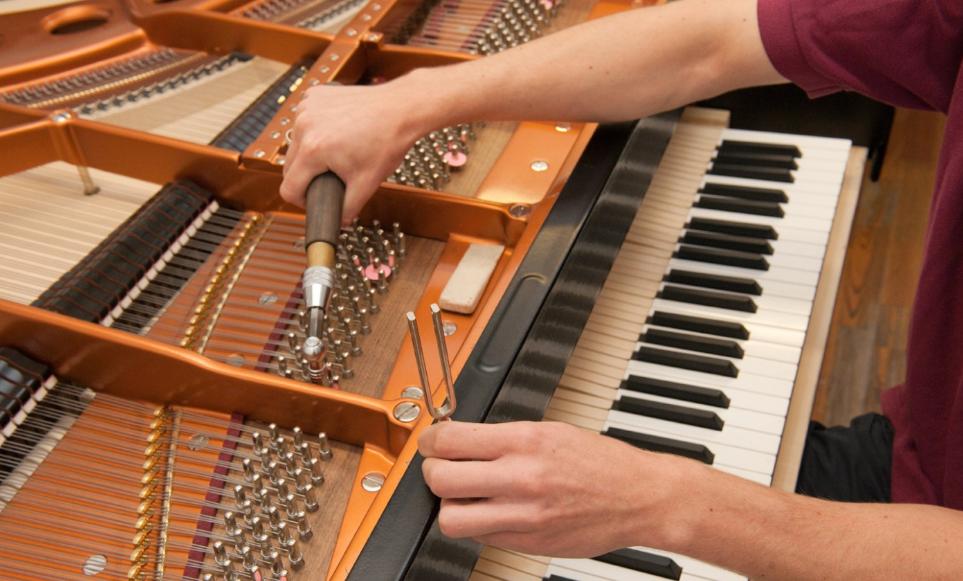
In a fabled story about Enrico Fermi (famous physicist), Fermi was asked how many people work as piano tuners in Chicago. Fermi did some mental arithmetic and quickly answered the question with surprising accuracy. Your task is to recreate Fermi's calculation.
Fermi's approach to solving such problems has spread far beyond the physics community. Today, tech companies and business consulting companies expect their employees to do Fermi problems: https://www.youtube.com/watch?v=KAo6Vn5bDF0.
Background: Pianos were popular when Fermi was living in Chicago in the 1940s. The population of Chicago was about 2 million people. Approximately 1 in 10 households had a piano. Pianos got out of tune at regular intervals (about 2 or 3 years), so the piano owner would call a technician (the piano tuner) to tighten/loosen the 88 strings inside the piano. Each tuning job took at least an hour.
Fermi used his general knowledge to estimate proportionality constants: For example, the number of pianos in Chicago was proportional to the number of households (the proporitionality constant was 0.1.).
To recreate Fermi's calculation make your own quantitaive estimates of proportionality constants (practice using your reasoning skills; avoid using Google). Each proportionality constant will be approximate; that is the essence of this estimation technique. To organize your calculation in a logical, easy-to-follow fashion, set up each line of math with one proportionality constant. For example,
\begin{align} ``(2 \times 10^6 \text{ people}) \div (3 \text{ people per household}) = 0.7 \times 10^6 \text{ households}'' \end{align}
Keep track of units as you go along: households, pianos, hours, etc. Use round numbers at each step of the calculation because a 5% calculational “error” will be smaller than the 10-30% uncertainty in the proportionality constants. How many piano tuners do you think were working in Chicago in the 1940s?
In the work below, I bold faced the five proportionality constants. I start with the population and estimate the number of households \begin{align} \text{(population of Chicago)} \div \textbf{(persons per household)} = \text{households} \end{align} Using the number of households, I calculate the number of pianos \begin{align} \text{households} \div \textbf{(households per piano)} = \text{pianos} \end{align} Using the number of pianos, I calculate the number of tunings per year, \begin{align} \text{pianos} \times \textbf{(tunings per piano per year)} = \text{tunings per year} \end{align} I need to know how many tunings a technician can perform each year: \begin{align} \textbf{(hours per technician per year)} \div \textbf{(hours per tuning)} = \text{tunings per technician per year} \end{align} Finally, I can calculate the number of technicians, \begin{align} \text{tunings per year} \div \text{tunings per technician per year} = \text{technicians} \end{align} Let's put in some numbers. Well assume a population of 2 million people. A typical household in the US is probably one kid and two parents (3 people), so there are \(\sim\)0.7 million households in Chicago.
The fraction of households that have a piano is less than 100% and probably more than 1%. I'll guess 10%. That means about 70,000 pianos in Chicago.
How often do people tune pianos? They shouldn't wait 10 years, but they can't afford every month. I'll guess once per year. Therefore, we expect 70,000 tuning jobs per year. (Note by David Roundy: I think we've had our piano tuned twice in 15 years, so this is perhaps a bit optimistic.)
It probably takes more than 1 hour to tune a piano but less than 10 hours (there are 88 keys and it probably takes about a minute for each string). I'll guess it takes 2 hours.
A typical worker works 40 hours/week \(\approx\)2000 hours/year. That means one technician can tune 1000 pianos per year. In conclusion, there must be about 70 piano tuners in Chicago.
Note: There are absolutely other ways you could have solved this problem had we not asked you to estimate hours. You could instead have estimated the salary of a piano tuner and the cost of a piano tuning. That's probably harder, if you've never paid to have your piano tuned.
- Speed of a solar car
S1 5510S
This self-driving solar car is travelling on a flat road on a windless day. The sun is directly overhead.
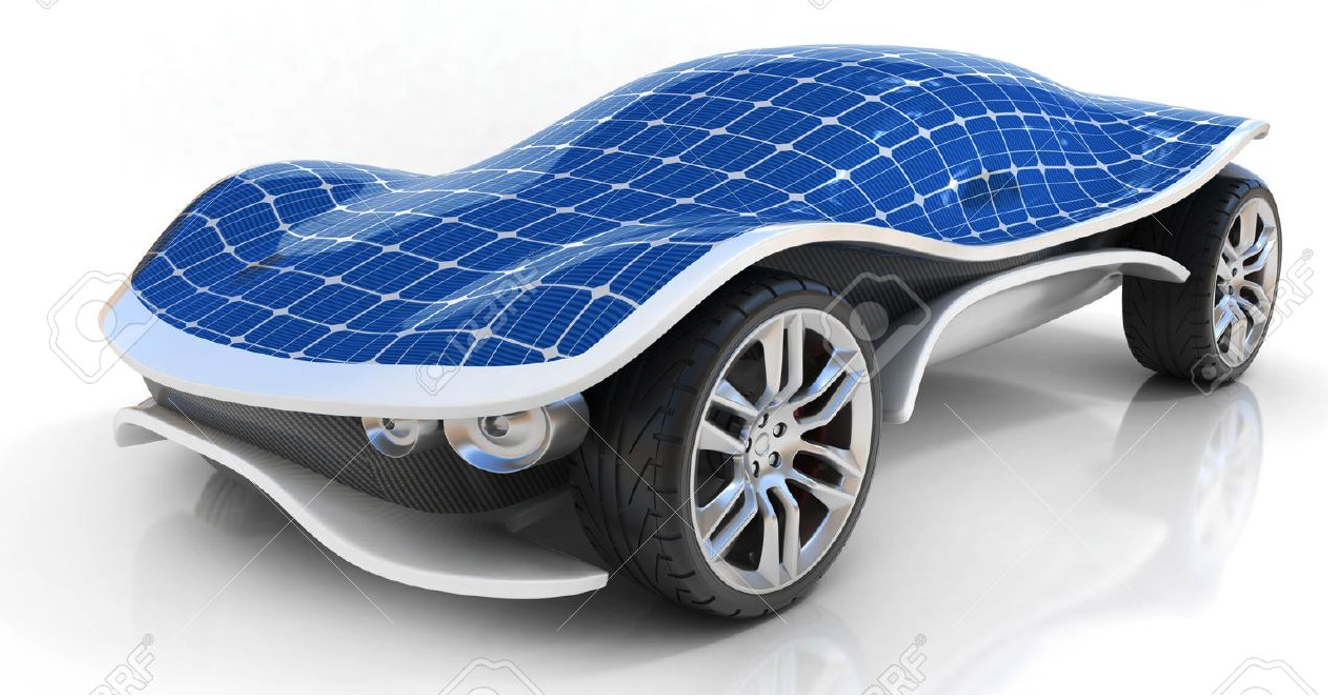
(a) Draw an energy flow diagram to describe the system. An arrow at the top of the flow diagram will represent incoming solar energy (landing on the solar panel). One circle will represent the solar panel, and one circle will represent the electric motor. Label each arrow with the correponding value of energy flow (a quantity measured in joules per second).
(b) Estimate how fast this self-driving solar car can travel on a flat road on a windless day when the sun is directly overhead. Give your answer in meters per second.
Use the following parameters for the system:
- The car is 1.8 m wide, 1 m tall and 3 m long. The top surface of the car is entirely covered with solar panels.
- The sun is directly overhead and the intensity of the sunlight is 1000 J/(s.m\(^2\)).
- The electric motors are powered directly by the solar panels (no battery power).
- The solar panels convert sunlight energy into electrical energy with 20% efficiency (the other 80% of sunlight energy is heating the solar panel).
- The electric motors convert electrical energy into mechanical work with efficiency 90% efficiency.
- The drag coefficient is 0.2.
- The energy dissipation associated with the tires rolling on the road can be neglicted.
We want to extimate how fast a new solar car design can travel.
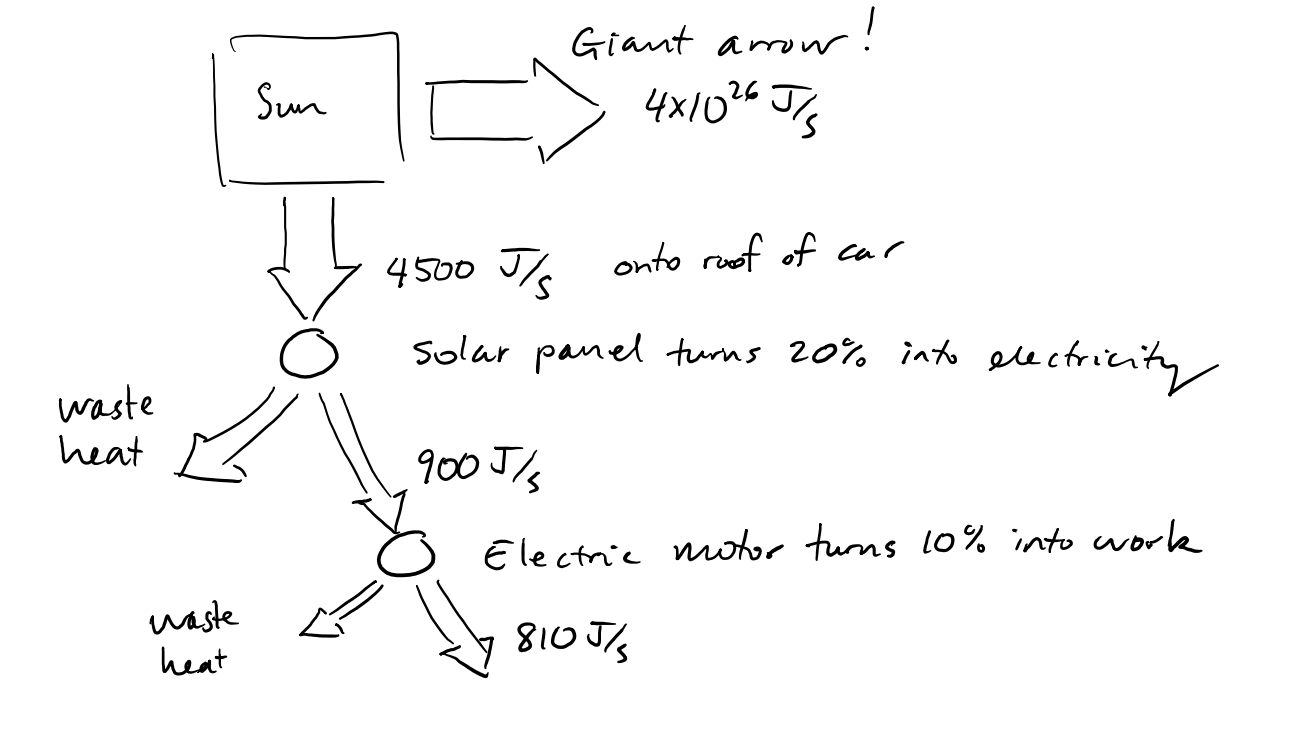
The 810 J/s goes into the Kinetic Energy of wind behind the car. \begin{align*} \frac{KE}{\Delta t} &= 810 \text{ J/s} \\ &= \frac{\frac{1}{2} \rho_{\text{air}} C_{\text{drag}} A v^{2}d}{\Delta t}\\ &= \frac{1}{2} \rho_{\text{air}} C_{\text{drag}} A v^{2}\frac{d}{\Delta t}\\ &= \frac{1}{2} \rho_{\text{air}} C_{\text{drag}} A v^{2}v \\ &= \frac{1}{2} \rho_{\text{air}} C_{\text{drag}} A v^{3} \end{align*} In this case, \(\rho_{\text{air}} = 1.3 \text{ kg/m}^3\), \(C_{\text{drag}} = 0.2\), and \(A = 1.5 \text{ m}^2\). We can use equation 1 to solve for \(v\) and substitute in the numerical values. \begin{align*} v = \sqrt[3]{\frac{2(810 \text{ J/s})}{(1.3 \text{ kg/m}^3) (1.5 \text{ m/s}) (0.2)}} = 16 \text{ m/s} \end{align*}
Sense-making
From class, we know KE\(_\text{of air}\)/\(\Delta\)t = 20,000 J/s when driving a car at 70 mph. The solar car is going 36 mph (about half the speed) and for the solar car KE\(_\text{of air}\)/\(\Delta\)t is about 20 times less. 70 mph \(\rightarrow\) 36 mph is consistent with reducing \(v^3\) by a factor of about 8. KE\(_\text{of air}\)/\(\Delta\)t has also been reduced by aerodynamic design.